Stories of Passing History Forward
Learn about some of the projects we’re part of, from activists working with their archival records to students writing about environmental justice history on Wikipedia!
At the core of preserving the history of the environmental justice movement is the understanding that those who lived the struggle are the ones who can best define its meaning. Consider the Environmental Health Coalition (EHC), which holds over 250 boxes of history dating back to 1980. Rather than simply handing these materials over to a repository, EHC hosts “treasure hunts” to engage community stakeholders in the archival process. In these sessions, current staff collaborate with longtime organizers and board members to turn the act of reviewing files into a communal process that supports and intergenerational transfer of knowledge, helping current organizers better understand the origins of their campaigns.
EHC is also making plans to digitize and publicly share copies of their newsletter, Toxinformer, which has been in circulation since 1982. These newsletters will provide a high-level overview of the organization’s long-standing activities. They will also help provide a framework for organizing and understanding the rest of EHC’s history and corresponding materials.

Clean up of the abandoned Metales y Derivados lead and copper recycling plant was completed in 2008. It required years of organizing and an historic bi-national agreement between the US and Mexico. Graphic designed by Mario Torero. Photograph by Diane Takvorian, circa 1998-2002.
For the movement to evolve, it must remember. At the Tonatierra Community Development Institute, where Indigenous rights and environmental justice efforts spanned from local community organizing to global Indigenous gatherings, the process of preserving history is about the sacred transfer of knowledge between generations.
Before his passing in 2023, Tonatierra co-founder Tupac Enrique Acosta laid the foundation for his life’s work and the work of Tonatierra to be accessible to those who would carry the torch forward. Today, family, friends, and colleagues are turning that vision into a reality. By opening up the sixty boxes that hold the record of Tonatierra’s decades of activism, they are creating a space for “contemplative review.” In these sessions, veterans of the movement sit alongside young people, transforming the act of sorting through files into a powerful exchange of experience.
By grounding this work in shared memory, Tonatierra is celebrating Acosta while ensuring that the lessons of the past become the fuel for current and future challenges. In this space, the archive becomes a classroom, grieving becomes a form of celebration, and the “story-keepers” of the next generation are born.
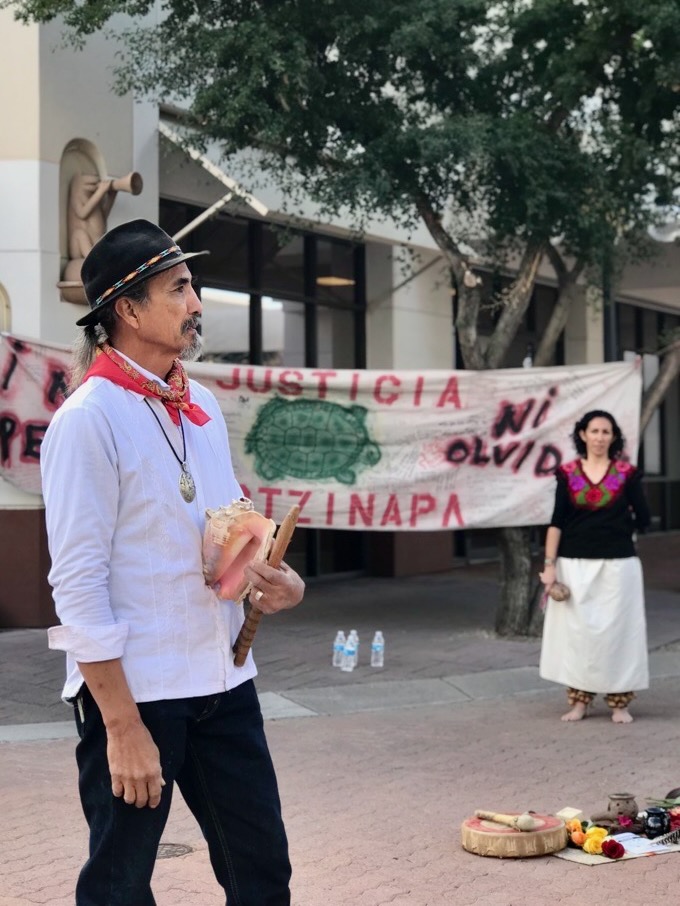
Tonatierra co-founder Tupac Enrique Acosta, with Raquel Enrique in background. Photo courtesy of Citlaxochitl Venzor-Enrique.
“Power Up for Justice! Know your history and create your own history!”
This principle guides Greenaction for Health and Environmental Justice as it embarks on a new chapter of its nearly 30-year history. With decades of activism documented in organizational records and co-founder Bradley Angel’s personal archives spanning 39 years of EJ organizing, Greenaction is transforming the paper, photos, and video of past fights against toxic infrastructure into a living resource.
By digitizing key records from campaigns on
rural, urban, and Indigenous lands across the US West, they are ensuring
that the hard-won lessons of yesterday are accessible for today. Through
their Leadership Academies, Greenaction is weaving these historical
narratives directly into the training of the current and next generation
of grassroots leaders, proving that when we know our past, we are better
equipped to shape the future of the environmental justice movement.
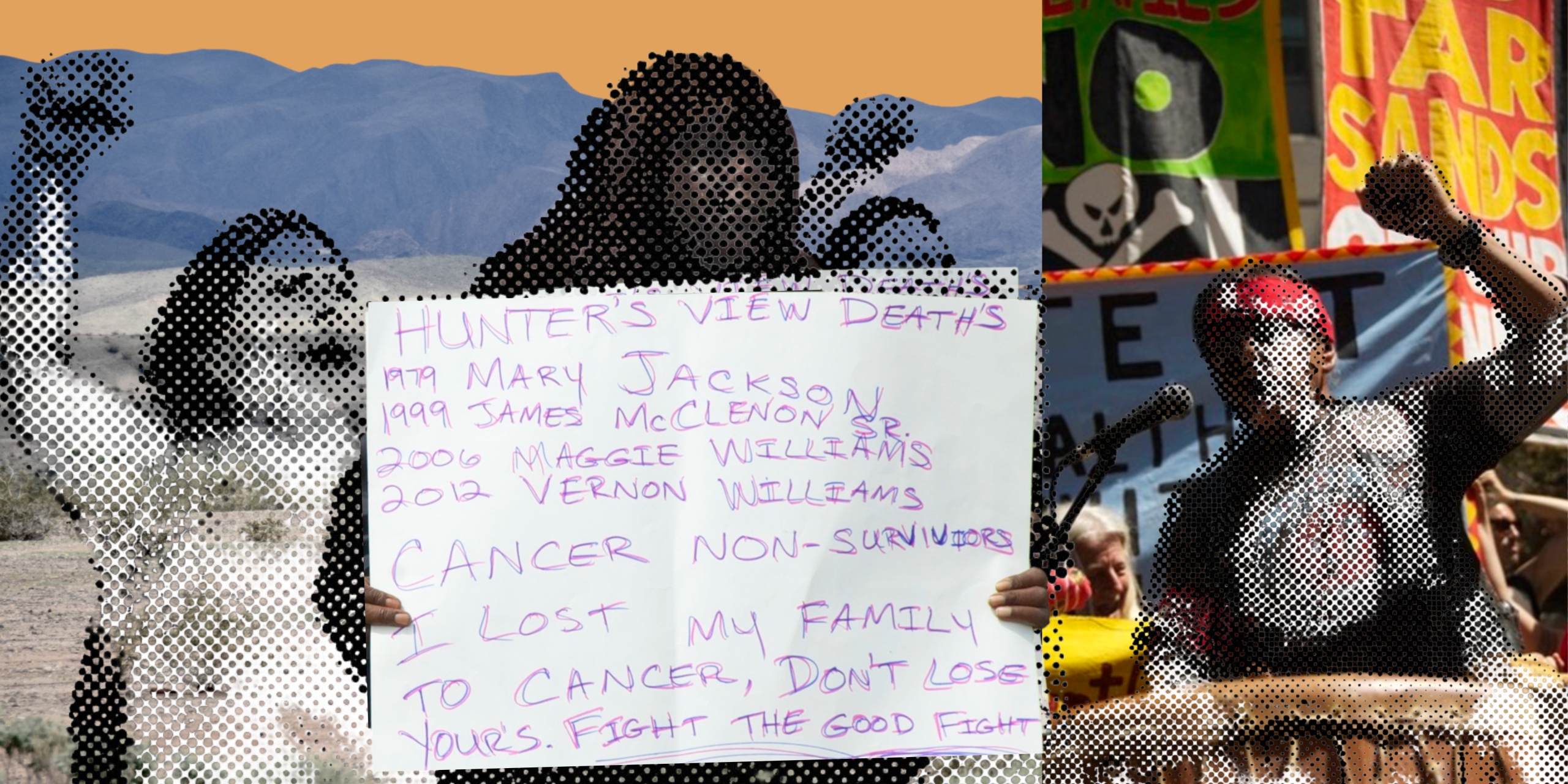
Michael Dorsey’s personal archive includes photographs that serve as a vital lens into the formative years of the environmental justice movement. Capturing pivotal environmental justice moments, including the landmark 1991 First National People of Color Environmental Leadership Summit in Washington, D.C., these images document a movement in its ascent.
Dorsey’s photographs are being digitized for use on Wikimedia Commons. They will improve coverage of environmental justice activism on Wikipedia, and simultaneously the depictions of people of color in general, who are underrepresented this global platform. These photographs are not static relics, but rather tools that provide visual proof of a struggle that continues to inspire collective action today.

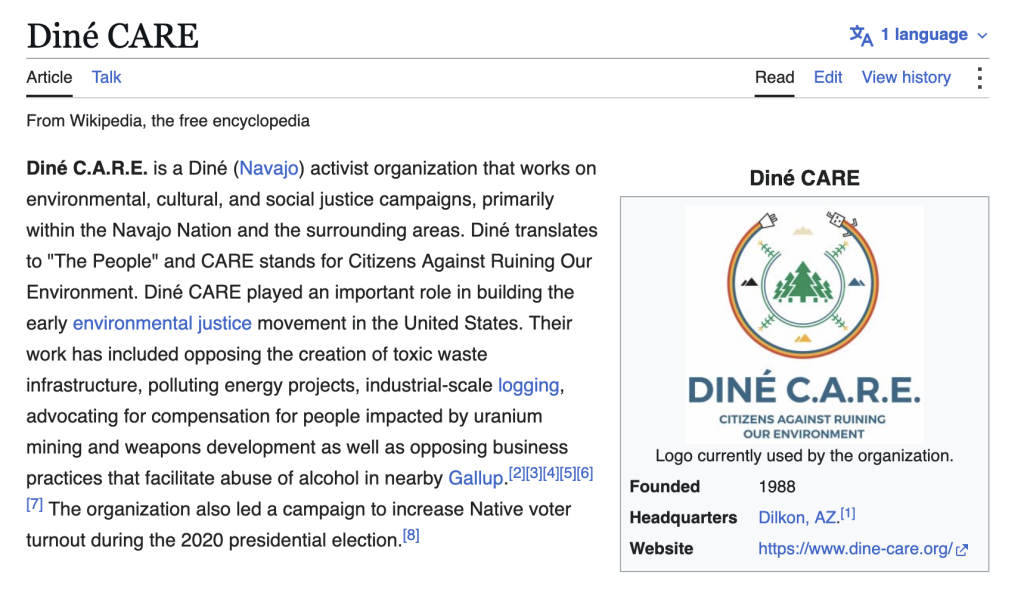
Activism burns brightly when fueled by wisdom from the past combined with insights about the present. The Environmental Justice Legacy Initiative is bridging the gap between movement elders and young people through course assignments to research and write about environmental justice topics on Wikipedia. Students may discover activists with whom they share deep cultural or tribal connections, transforming academic work into personal discovery. This process is deepened through direct, intergenerational exchange through classroom visits by activists or editing oral history interviews of activists. Students begin to recognize the difference between “official” historical records and lived experiences. Ultimately, as an act of intergenerational resilience, students become environmental justice stewards, ensuring that hard-fought campaigns of the past are not forgotten, which helps build a stronger, more informed movement today.