
Learn About Us
Establishing intersectional collective archiving for environmental justice
Working to broaden representation and participation by walking alongside activists, organizers, and communities, we exist to guide the stewardship of materials and environmental justice legacies. Focusing on environmental justice activism, this initiative crosses organizations, geographic regions, racialized and cultural groups towards a collective effort, beyond the idea of a few great leaders.
Centering community agency and sovereignty in archiving
We center the values, sovereignty, and histories of frontline communities, supporting their agency throughout the archival process, rather than waiting for an archival institution to direct if and how to preserve activists’ efforts. We do not collect archival materials directly. Instead, we encourage activists to archive their work and provide guidance on historic preservation, so that communities can voice their own stories for historical preservation.
Building an inclusive legacy for future generations
Working towards collective outcomes, we adopt an intergenerational framework to advance the environmental justice movement across age and experience levels. Our approach is rooted in archival storying, ensuring that the movement’s diverse voices are authentically preserved to inspire future generations to take action.
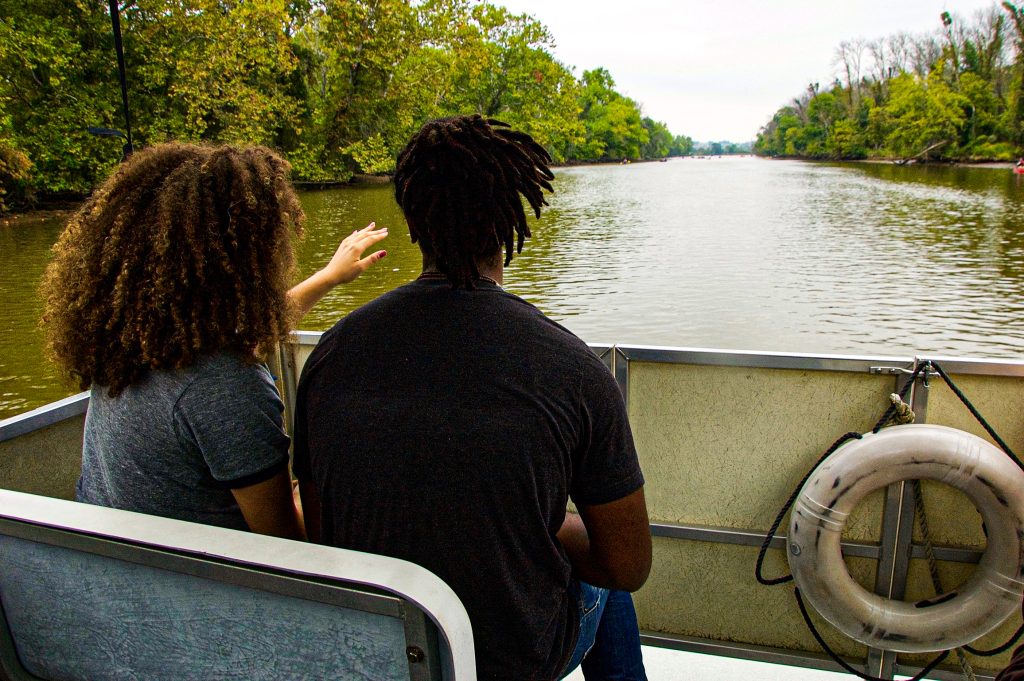
Howard University students learning about the Anacostia River and related development, pollution and environmental justice activism of nearby neighborhoods. Photograph by Tracy Perkins.
Lived realities are valuable
Activists’ stories are essential to learning and exploring the environmental justice movement. When activists share their stories, they help to validate the movement , inspire connections to shared values, and spur action. These stories show that activists’ contributions matter. Their history of struggle in difficult political environments provides important lessons for the challenges we face today.
Intergenerational and intersectional collaboration is generative
Past and ongoing efforts by grassroots activists have been a powerful force in the environmental justice movement, yet they are systemically underrecognized. Sharing learnings and stories across identities, communities, and generations fuels stronger movements that learn from past successes and mistakes. Preserving activists’ experiences and insights ensures the movement’s wisdom endures, serving as a powerful foundation for younger generations to create their own strategies and innovative solutions. By engaging with this lineage, young people actively shape a movement that addresses today’s struggles with both historical depth and fresh perspectives.
Environmental justice preservation is urgent
Environmental justice history must be documented, uplifted, and shared, especially at a time when the work is under attack and movement successes are being erased. It is crucial to hold a permanent record of environmental justice work, particularly when critical cultural resources are being taken offline, and we are losing movement elders.